

Why Affiliate Marketing Is the Smartest First Step for Anyone Starting From Zero

You have probably spent more evenings than you would like to admit watching YouTube videos about making money online, only to close the tab feeling more confused than when you opened it.
Dropshipping looked promising until you saw the startup costs.
Freelancing felt like a dead end the moment you realised every listing wanted a portfolio you do not have.
And the courses promising to change your life for three easy payments of $197 did not exactly inspire confidence.
If that sounds familiar, you are not behind.
You are just looking for something that actually fits your situation: no capital to burn, no specialist skill to sell, and a full-time job you cannot afford to walk away from yet.
Affiliate marketing is worth understanding properly, because when it is explained honestly rather than hyped, it is one of the few online income methods that genuinely suits someone starting from exactly where you are.
What Affiliate Marketing Actually Is?
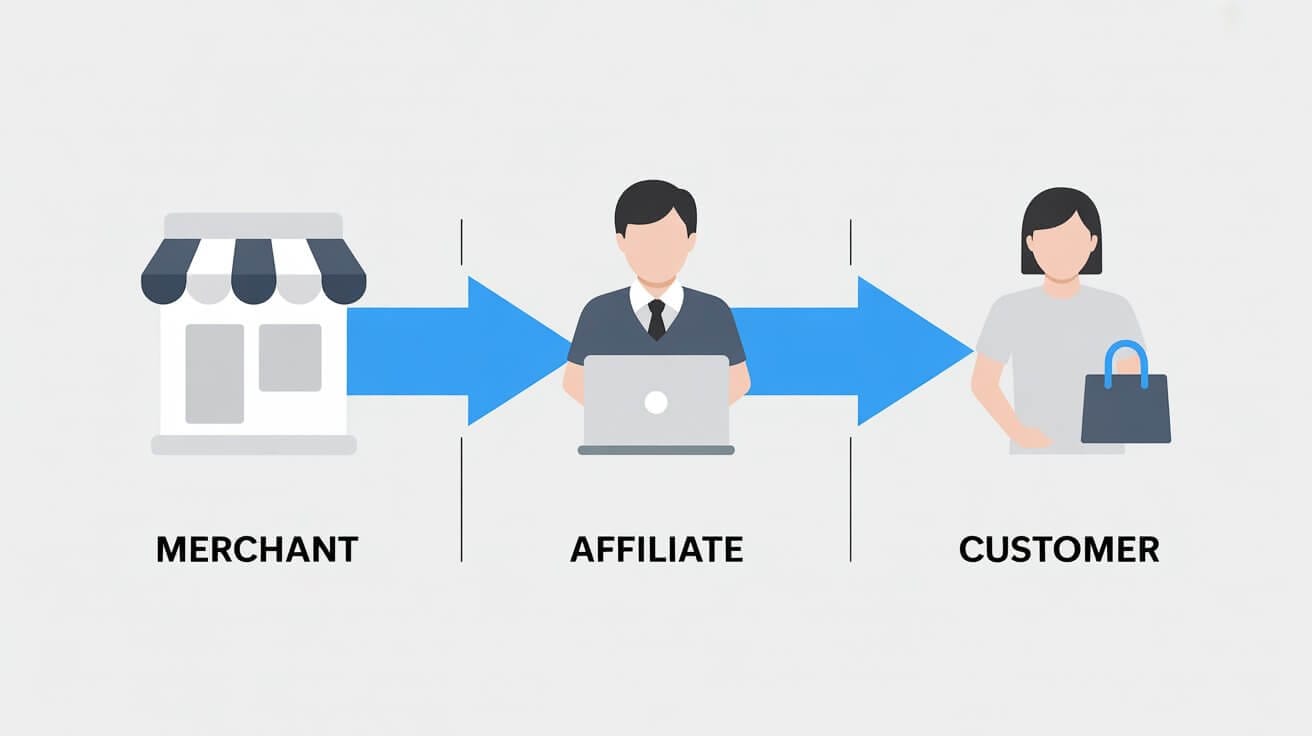
The basic idea is straightforward.
A company wants more customers.
You help them find those customers.
When someone buys through your recommendation, you earn a percentage of the sale.
That percentage is your commission.
You do not create a product.
You do not handle stock, shipping, or customer service.
You are connecting a buyer to something they were likely going to buy anyway and getting paid for that introduction.
Here is how it works in practice, step by step:
You join an affiliate programme. Most are free to join. Amazon Associates, ShareASale, and ClickBank are common starting points for beginners, and signing up takes around ten minutes.
You choose a product to promote. This can be something you already use, something relevant to a topic you know reasonably well, or something you have researched enough to describe accurately.
You receive a unique tracking link. This is just a URL with a code attached. When someone clicks it and buys, the sale is recorded as yours.
You share that link somewhere your audience will see it. This could be a blog post, a Pinterest pin, a YouTube video, a TikTok, or even a well-placed comment in a forum where the product is relevant.
When a purchase is made through your link, the merchant pays you a commission. Most programmes pay per sale, though some pay per lead or per action depending on the product category.
That is the entire mechanism. There is no secret layer underneath it.
What It Actually Costs to Start?
Here is a direct comparison between what most people assume affiliate marketing requires and what it actually requires:
What people assume
You need a professional website
You need money for ads
You need thousands of followers
You need to be an expert
You need to quit your job to commit
What is actually true
You can start on free platforms like Medium, Pinterest, or TikTok
Organic content costs nothing but time
A small, relevant audience converts better than a large, uninterested one
You need to know enough to be useful, not enough to be a professor
Most successful affiliates built their income around full-time work
The honest minimum to get started is a device with internet access and a free account on one platform where you can publish content.
That is it.
The Expertise Question (And Why It Is Not What You Think)
One of the most common reasons people hold back is the belief that they must be an authority before recommending anything.
This is worth addressing directly because it prevents many people from starting.
You do not need to be an expert.
You need to be genuinely useful to someone who knows less than you do, which is a much lower bar.
If you have spent three months researching standing desks because your back has been causing you problems, you know more than someone who is just starting that search.
That is enough to write something helpful, include an affiliate link to the desk you would actually buy, and earn a commission when they agree with your reasoning.
The misconception is that affiliate marketing is about performing with authority.
It is actually about reducing someone else's research time.
Your job is to be one useful step ahead of the buyer, not ten steps ahead.

What Realistic Earnings Look Like
This is where a lot of affiliate marketing content does a disservice by either overpromising or saying nothing useful at all.
So here is an honest picture.
Most beginners earn nothing in their first four to eight weeks.
This is normal and does not mean the method is broken.
It means content takes time to get found, and trust takes time to build.
For part-time beginners putting in consistent effort, a realistic target for the end of the first three to six months is a first commission notification.
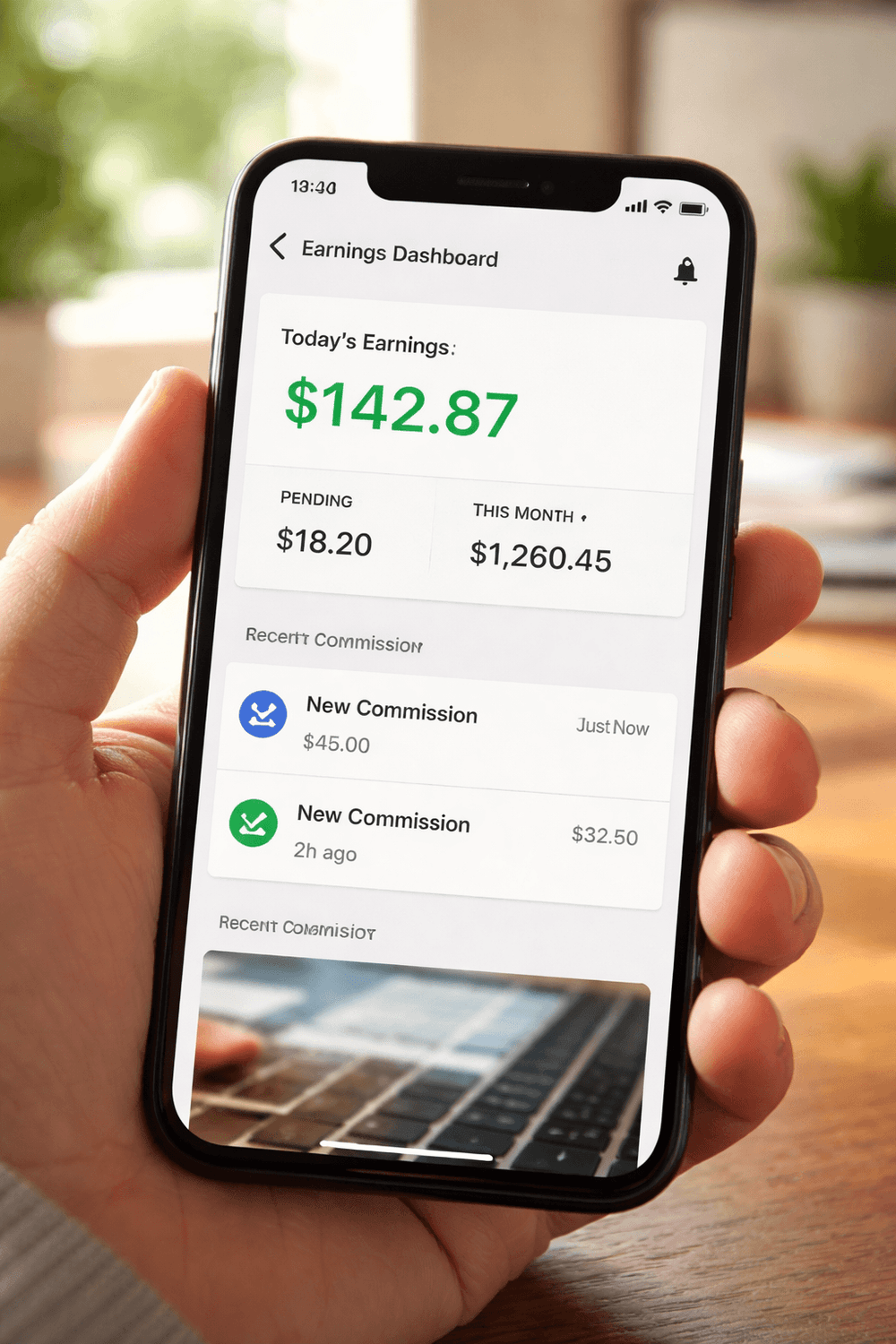
It might be $12.
It might be $47.
It will probably not be life-changing, but it will be proof that the mechanism works, and that proof changes everything about how you approach the next month.
Income is uncapped in theory because you are not trading hours for a fixed salary.
In practice, what you earn scales with the quality and reach of your content over time.
Some affiliates earn a few hundred dollars a month as a reliable side income.
Others build it into something that replaces their salary entirely.
Both outcomes start from the same first commission.
The Practical Advantages Over Other Options You Have Probably Already Considered
No inventory to buy or store
No clients to manage or chase for payment
No fixed schedule or minimum hours required
You can work on it at 10 pm after the kids are in bed, or on a Sunday morning
If something is not working, you can change direction without losing the money you have already spent
The income, once built, continues even when you are not actively working on it
This last point matters because it is what separates affiliate income from freelancing.
A freelance project pays you once for your time.
A well-written affiliate article or video can earn commissions for months or years after you created it.
This Is Not MLM, and the Difference Matters
If you have had someone pitch you on a network marketing scheme at any point in the last few years, you might have a reasonable alarm going off right now.
The distinction is worth being clear about.
Multi-level marketing requires you to recruit other sellers.
Your income depends partly on what those recruits sell, and partly on recruiting them in the first place.
It often involves pitching friends and family, and the income structure benefits those at the top disproportionately.
Affiliate marketing has none of that.
You promote a product.
A stranger buys it.
You earn a commission.
There is no recruitment involved, no downline, and no requirement to involve anyone you know personally.
Your results depend entirely on your own content and effort, not on convincing other people to join something.
Keeping Your Job While You Build
The structure of affiliate marketing fits around employment in a way that most online business models do not.
You are not taking on clients who expect availability during business hours.
You are not managing a shop that needs attention every day.
You are creating content on your own schedule and letting it work in the background.
Starting part-time is not a compromise.
It is actually a sensible way to test what works before deciding whether to scale.
Most people who eventually move into affiliate marketing full-time spent twelve to twenty-four months building it alongside a job first.
That runway is what makes the transition possible without financial risk.
Your Actual First Step
The most common reason people research affiliate marketing for months without starting is that they cannot identify a single concrete action to take tonight.
So here is one:
Pick one topic you know something about, even something small.
Search for affiliate programmes related to that topic.
Sign up for one.
Read what the programme pays and what products it offers.
That single hour of action puts you further along than 90 per cent of people who read articles like this one.
The income does not arrive the moment you sign up. But the process only starts when you do.

"Helping beginner marketers go from $0 to 6 figures by leveraging the power of internet marketing."
Newsletter
Subscribe now to get daily updates.
2025 ©marketingwithrashid.com


